

A homeowner in West Cheshunt recently contacted us after suddenly losing power to their lighting circuit. The circuit breaker had tripped during the afternoon and wouldn't reset, leaving parts of the house without lighting.
When we arrived, we safely isolated the consumer unit and started investigating. As soon as we opened the fuseboard, we noticed something unusual. Green goo was visible on the cables, and a small pool of the substance had collected at the bottom of the consumer unit.
I've been working as an electrician for around 20 years, and this is something I've come across with older electrical installations.
We carried out electrical testing and found a direct short circuit on the lighting circuit. As we investigated further, we discovered signs of electrical arcing inside light fittings and switches. Further checks revealed similar concerns affecting other circuits throughout the property.
What began as a call about a tripping breaker became a much bigger conversation about the condition of the home's electrical installation.
After spending time with the homeowner and explaining what we'd found, we agreed that a full house rewire would be the most sensible long-term solution.
The project eventually went beyond replacing old wiring. We helped the customer modernise their home with additional sockets and lighting, an EV charger, battery storage and an emergency power supply system to help protect their home office during power cuts.
What Is Green Goo on Sockets and Switches?
If you've spotted a sticky green substance around a socket, light switch or inside your fuseboard, it's worth having it investigated.
Electricians commonly refer to this substance as green goo or green slime.
It's associated with certain PVC-insulated electrical cables, particularly those manufactured during the 1960s and 1970s.
The substance develops when chemicals used to make the cable insulation flexible break down and react with the copper conductors. Over time, the resulting material can migrate along the cable and appear around electrical connections.
Sometimes homeowners first notice it as green staining around a socket or switch. In more severe cases, it can collect inside electrical accessories and consumer units.
In the West Cheshunt property we attended, there was enough green goo to form a small pool at the bottom of the fuseboard. That immediately raised concerns about the condition of the cables.
Does green goo mean your house needs rewiring?
Finding green goo doesn't automatically mean that your entire house needs rewiring.
We need to inspect the affected wiring, carry out appropriate testing and assess how widespread the problem is. Some cases can be addressed without rewiring an entire property, but we need to establish the condition of the cables and accessories first.
At our West Cheshunt job, we had several problems to consider:
- A lighting circuit with a direct short circuit.
- Visible green contamination inside the consumer unit.
- Signs of arcing around switches and light fittings.
- Similar concerns discovered on other circuits.
The combination of these findings influenced our recommendation. Green goo alone doesn't establish the cause of a short circuit. We investigate each defect properly rather than assuming one visible problem explains everything.
Why Older Houses in West Cheshunt Can Need Rewiring
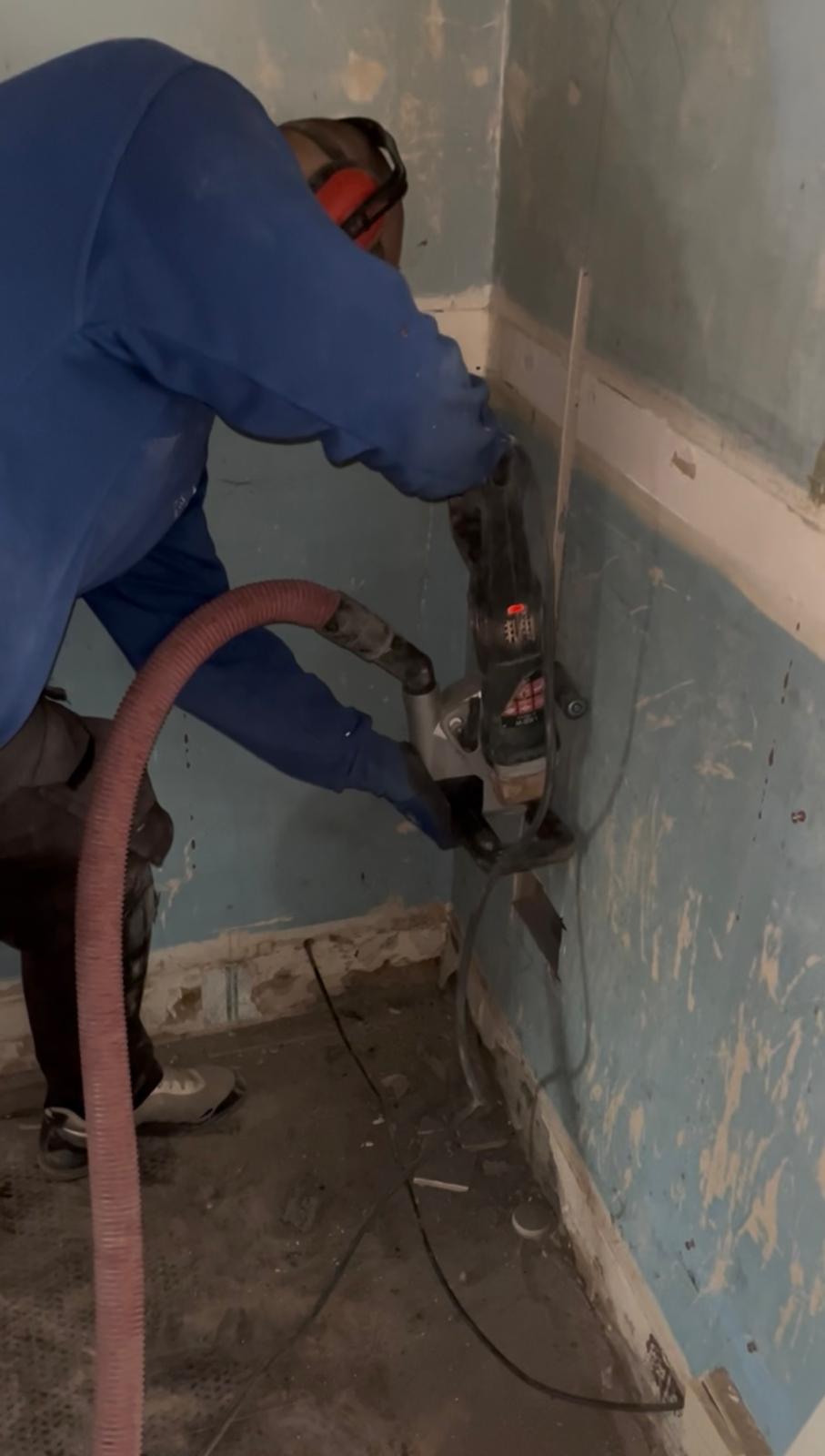
West Cheshunt has a considerable number of houses built between the 1950s and 1970s. We regularly work on properties from this period, and some still have sections of their original electrical installation.
A house built in 1965 could have had several electrical alterations over the years. New sockets may have been installed, a kitchen might have been refurbished, and the fuseboard could have been upgraded. But that doesn't necessarily mean the original wiring has been replaced.
We've seen how homeowners can assume their electrical installation is relatively modern because the sockets and switches look new. The condition of the cables hidden behind walls, underneath floorboards and above ceilings matters just as much.
When assessing house rewiring in West Cheshunt, one of the first things we want to establish is the actual condition and age of the existing wiring. A property's age gives us a reason to investigate. The inspection and testing results help us decide what work is necessary.
Five Warning Signs Your Home May Need Rewiring
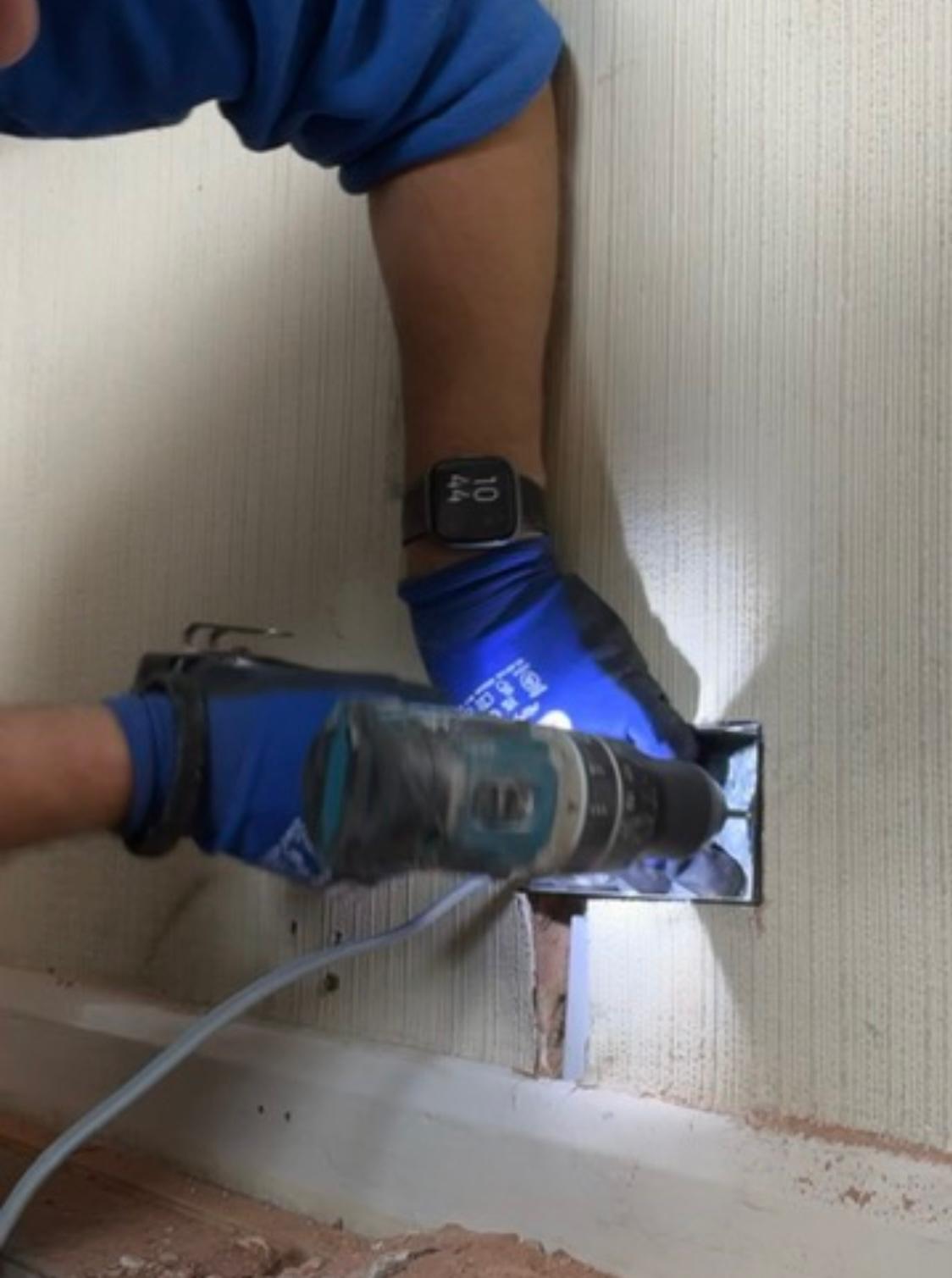
- Circuit breakers keep tripping
A circuit breaker that trips repeatedly is telling you something needs investigating. There are several possible causes, including a faulty appliance, damaged cable, poor connection or short circuit.
In the West Cheshunt property, the lighting breaker tripped and wouldn't reset. Testing confirmed a direct short circuit. If your breaker keeps tripping, avoid repeatedly resetting it. Contact an electrician to investigate the fault.
- Green goo appears on sockets or switches
Green goo may indicate deterioration associated with older PVC cable insulation. If you notice green staining around electrical fittings, especially in a house built during the 1960s or 1970s, arrange an inspection.
Don't remove the socket or attempt to clean inside it yourself. The contamination and condition of the wiring need to be assessed safely.
- Burning smells, buzzing or signs of arcing
Electrical arcing occurs when electricity passes through an unintended gap or a poor connection. It can create considerable heat and damage electrical components.
During our West Cheshunt investigation, we found signs of arcing around light fittings and switches. Blackened terminals, signs of overheating, crackling sounds or an unusual burning smell should always be taken seriously.
If you notice these symptoms, stop using the affected circuit where safe to do so and arrange urgent electrical attention.
- You rely on extension leads for everyday use
Many older houses were wired at a time when people owned far fewer electrical appliances. Modern homes now have televisions, computers, kitchen equipment, chargers and home office setups.
If you're constantly using extension leads because there aren't enough sockets, it may be worth reviewing your electrical installation. This doesn't automatically mean you need a complete rewire. We can sometimes install additional circuits or sockets safely after checking the existing wiring.
- Nobody knows when the electrics were last inspected
One of the most common things I hear from homeowners is that they have no idea when their house was last rewired or electrically tested.
If you have no recent electrical inspection paperwork, particularly in an older property, arranging an Electrical Installation Condition Report is a sensible starting point. It gives us a clearer picture of the installation's condition and helps identify any safety concerns.
Why an EICR Is So Important Before Deciding to Rewire
An Electrical Installation Condition Report, usually called an EICR, is an inspection and testing assessment of your property's fixed electrical installation. It's one of the most useful ways to understand whether your electrics are safe for continued use.
During an EICR, we examine relevant parts of the installation, including the consumer unit, wiring, earthing arrangements, bonding, sockets and lighting circuits.
We also carry out electrical tests appropriate to the installation. These can include insulation resistance testing, continuity testing, polarity checks and protective device testing. The aim is to identify deterioration, defects and conditions that could present a risk.
The report records our findings, identifies any inspection limitations and explains what action may be needed.
What do EICR codes mean?
You'll normally see the following classifications on an EICR:
- C1: Danger present. Immediate action required.
- C2: Potentially dangerous. Urgent remedial action required.
- C3: Improvement recommended.
- FI: Further investigation required without delay.
A satisfactory report doesn't necessarily mean the installation is brand new or complies with every requirement introduced since it was installed. It means the inspection hasn't identified defects requiring an unsatisfactory assessment.
Why I wouldn't recommend choosing the cheapest EICR
I understand that nobody wants to spend more than necessary on electrical testing. However, the quality of an EICR depends on the time spent inspecting and testing the installation, the competence of the electrician and how thoroughly the findings are recorded.
A proper inspection takes time. If somebody offers an unusually cheap EICR, it's worth asking what the inspection includes, whether accessible circuits will be tested appropriately and how long they expect to spend at the property.
A rushed inspection may miss issues that could become expensive or dangerous later.
For owner-occupied homes, periodic electrical inspection is generally recommended at least every ten years, or sooner where the installation's condition warrants it. For rented properties in England, landlords must arrange inspection and testing at intervals of no more than five years, or sooner if the previous report specifies.
If you're buying an older property, an EICR before committing to refurbishment work can also help you understand potential electrical costs.
Should You Repair the Fault, Upgrade the Fuseboard or Rewire the House?
This is something we discuss with customers regularly. The right option depends on the condition of the existing installation.
Repairing an individual electrical fault
If testing shows that the wiring is generally in good condition and a problem affects one fitting or section of cable, a targeted repair may be appropriate. We investigate the fault, identify the cause and explain the available options.
Upgrading the consumer unit
A modern consumer unit can provide improved protection through suitable circuit breakers, RCBOs and surge protection devices. However, fitting a new fuseboard doesn't repair damaged cables hidden throughout a house.
Before recommending a consumer unit upgrade, we assess the existing installation to establish whether it is suitable for the proposed work.
Carrying out a full house rewire
When we find widespread deterioration, damaged insulation or significant faults across multiple circuits, a full rewire may provide the best long-term solution.
That's where our West Cheshunt customer found themselves. We could have focused initially on the lighting fault, but the additional findings across the property meant we needed to discuss the condition of the entire installation.
After reviewing everything together, the homeowner chose a complete rewire.
What Happens During a House Rewire?
One of the biggest concerns homeowners have about rewiring is disruption. I understand why. Much of the work involves cables concealed behind walls, under floors and above ceilings.
Before starting, we spend time discussing how you use each room and what you'd like to change.
Planning sockets and lighting for modern living
A rewire gives you the opportunity to position sockets and lights where you actually need them. We encourage customers to think about where their furniture will go, how they'll use each room and whether their requirements might change.
For example, you might want additional sockets beside beds, more convenient power supplies in the kitchen or extra lighting in a home office. You can also consider outdoor lighting, supplies for garden buildings and future electrical upgrades.
During the West Cheshunt project, we worked with the homeowner to plan additional sockets and lighting to make the house better suited to modern living.
Installing the new wiring
Once we've agreed the layout, we plan cable routes and install the required circuits. Depending on the property, this can involve lifting floorboards, accessing loft spaces and chasing walls.
We discuss the likely disruption beforehand so customers understand which areas will be affected. The extent of making good and decorating should also be agreed before work starts.
Testing and certification
Once the wiring and accessories have been installed, we carry out the required inspection and testing. This includes checking the circuits and protective arrangements before the installation is put into service.
We also provide the appropriate electrical certification and arrange the required Building Regulations notification for notifiable domestic work.
A rewire is a substantial investment, so I want customers to understand exactly what's being installed and why.
Making a Rewire Work for Future Energy Needs
One of the advantages of planning a full rewire is that we can look at the property's wider electrical requirements at the same time. Many homeowners are becoming more concerned about electricity costs, electric vehicles and power cuts.
Our West Cheshunt customer wanted to address all three.
Installing an EV charger
As part of the project, we installed an EV charger so the homeowner could charge their electric vehicle at home.
When planning an EV installation, we assess the available electrical supply, existing loads, cable routes and any load management requirements. Considering the charger during a rewire can make it easier to coordinate the electrical work and avoid unnecessary disruption later.
Adding a battery storage system to reduce electricity bills
We also installed battery storage to help the customer make better use of cheaper overnight electricity. This is commonly known as electricity tariff arbitrage.
The principle is straightforward. The battery charges overnight when the customer's electricity tariff is cheaper. During the day, when electricity costs more, the stored energy can be used to supply household appliances.
For example, someone paying 7p per kWh overnight and 28p per kWh during the day could potentially reduce the cost of the electricity they consume from the battery.
Actual savings depend on the tariff, battery efficiency, household consumption, usable storage capacity and how the system is operated. You don't necessarily need solar panels for this type of battery system to be useful.
Battery backup for someone working from home
There was another important consideration on this particular job. The homeowner works from home and was concerned that a power cut could interrupt their work and result in lost earnings.
We installed an Emergency Power Supply, known as EPS, as part of the battery storage system.
A correctly designed EPS system can supply selected circuits, or a larger part of the property where the equipment and installation support it, when the normal electricity supply fails. The length of time the battery can provide backup depends on the available stored energy and the electrical loads being supplied.
It's also important to understand that EPS systems can have a changeover delay. For computers or equipment that cannot tolerate even a brief interruption, additional UPS protection may be required.
We discuss these requirements during the design stage so customers know which equipment will be supported and what to expect during a power cut.
For this customer, combining the rewire with EV charging, battery storage and backup power made sense because we could plan the electrical installation around their requirements.
Choosing an Electrician for House Rewiring in West Cheshunt
If you're considering house rewiring in West Cheshunt, I'd encourage you to speak to the electrician who will be carrying out the work and ask them to explain their recommendations.
At JJB Electrical Ltd, we've spent around 20 years working with domestic electrical installations, from smaller repairs and electrical testing through to full rewires and renewable energy systems.
We're registered with NAPIT, TrustMark and Which? Trusted Traders, and we hold MCS certification for our renewable energy work. We also have more than 200 customer reviews.
One of the things we take seriously is turning up when we say we will. If we arrange a visit, we want customers to know they can plan their day around it.
If an inspection shows that your house only needs a smaller repair or a consumer unit upgrade, we'll explain that option. And if a full rewire is necessary, we'll talk through the work involved and help you decide how best to approach it.
We want you to understand the condition of your electrics and feel comfortable with the work you're choosing to have done.
Frequently Asked Questions About House Rewiring in West Cheshunt
What does green goo on sockets and switches mean?
Green goo can develop when certain older PVC cable insulation materials deteriorate and react with copper conductors. We'd recommend arranging an electrical inspection to establish the condition of the affected cables and whether any remedial work is necessary.
Does a house built in the 1960s or 1970s need rewiring?
Not necessarily. We assess the existing wiring, previous alterations and test results before advising whether a repair, partial rewire or complete rewire is appropriate.
What is an EICR, and how often should I have one?
An EICR assesses the condition and safety of your fixed electrical installation. We generally recommend inspection at least every ten years for owner-occupied homes, while landlords in England must arrange testing at least every five years, or sooner if required.
Can I add more sockets and lights when my house is rewired?
Absolutely. We plan socket positions, lighting layouts and additional circuits with you before starting, so the finished electrical installation works for the way you use your home.
How does an electricity arbitrage battery system reduce my bills?
We can install a battery system that charges during cheaper off-peak electricity periods and supplies stored energy when electricity is more expensive. Your actual savings will depend on your tariff, consumption, battery efficiency and system design.
Can battery storage keep my house running during a power cut?
Yes, provided we install a suitable system with an emergency backup capability. We'll explain which circuits can be supplied, how long the battery may last and whether additional UPS protection is needed for equipment that must remain uninterrupted.
Concerned About the Wiring in Your West Cheshunt Home?
If you've discovered green goo on your sockets or switches, your electrics keep tripping, or you're unsure when your home was last rewired, we're happy to help.
At JJB Electrical Ltd, we can inspect your installation, explain what we find and recommend the most appropriate next steps.
Whether you need an EICR, a consumer unit upgrade or a complete house rewire, call us on 01992 276087 for a friendly chat about your requirements.
We're happy to arrange a visit and talk through your options, with no obligation to proceed.